 EXTERIORS
One exterior company or three contractors? What Tampa Bay homeowners should know
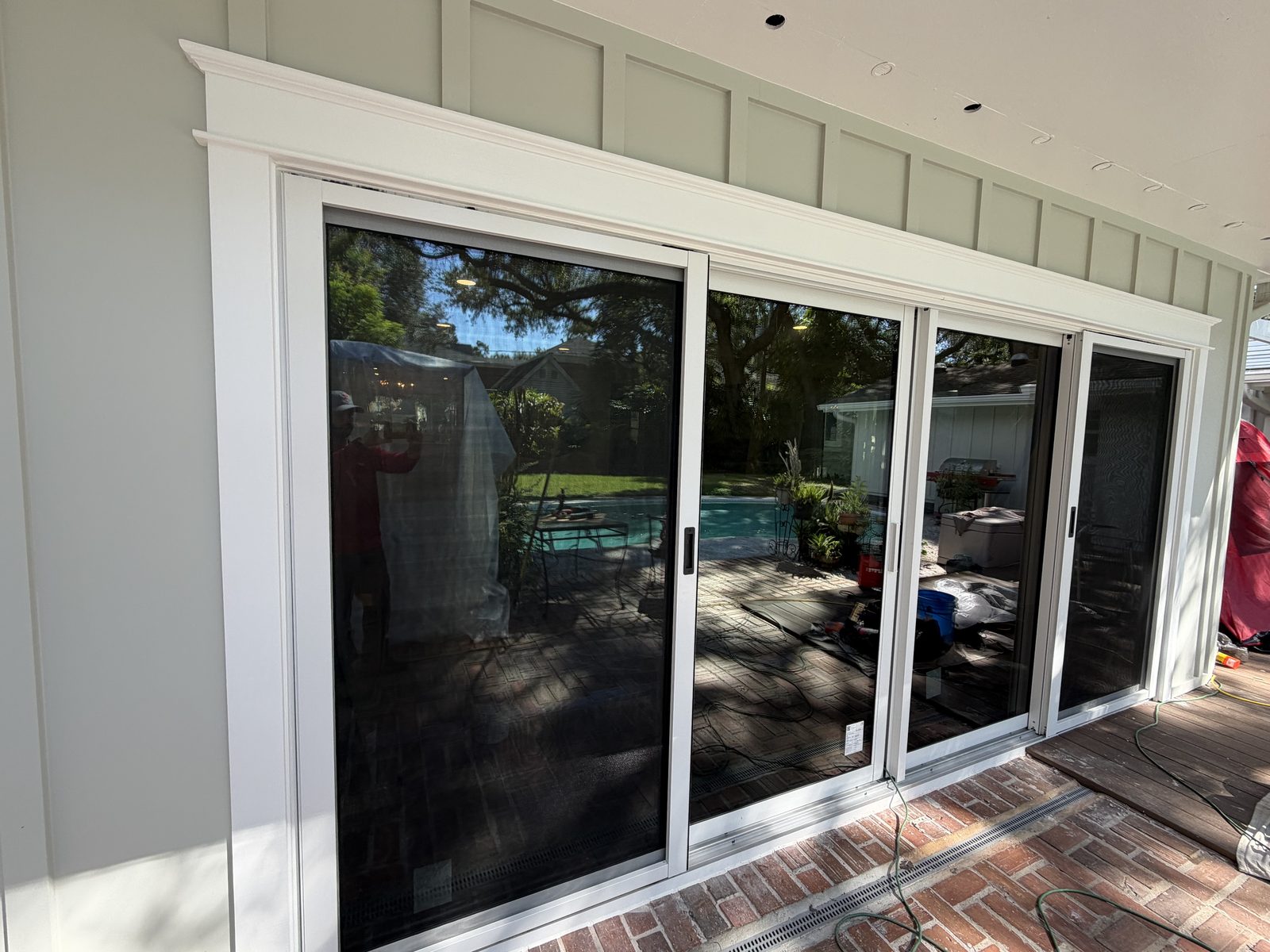
Your roof, windows, doors, and walls aren't separate projects to the rain. They're one system that keeps water out of your house. Most leaks don't start in the middle of a window or a shingle. They start at the seams, where one trade's work meets another's.
Where water actually gets in
A HUD-sponsored study of siding, window, and door systems found that "windows and other penetrations are the most susceptible to water intrusion," and that whatever cladding is used, "the weather barrier and flashing system behind it is of the utmost importance" (HUD, Water Intrusion Evaluation for Caulkless Siding, Window, and Door Systems).
The National Association of Home Builders puts it simply: window and door flashing has to be integrated with the water-resistive barrier (the house wrap) and lapped "shingle-fashion," so each upper layer overlaps the one below and water drains out instead of behind (NAHB TechNote, Window and Door Flashing).
That's the catch. The window installer owns the window. The siding installer owns the wrap. The roofer owns the flashing where the roof meets the wall. The part that keeps water out is where all three overlap.
Plenty of Florida homes don't have siding at all. They're concrete block with stucco, and the seams are just as important. After the 2004 hurricanes, Building Science Corporation studied new Florida homes for the state's home builders. It found that block is "the standard first floor wall construction of the majority of homes" in the region. In its tests, stucco walls without cracks didn't leak, but cracks "caused all mass wall assemblies to pass water," and some cracking in stucco "is to be expected" (Building Science Corporation, Rainwater Management Performance of Newly Constructed Residential Building Enclosures, 2005).
Ask: "Who is responsible for the flashing where my windows meet the wall, and where my roof meets the wall?"
The order of the work matters
Manufacturers spell out a sequence. DuPont's Tyvek installation guide says the best time to install the water barrier is after the roof sheathing and the step and kick-out flashings are in, and before the windows and doors go in. If windows are replaced along with the siding, the openings are flashed after the new barrier is installed (DuPont Tyvek Residential WRB Installation Guidelines). A window manufacturer's guidance for installers says the same thing from the other side: account for the trades that come after you, and tie your sill flashing into the barrier (Andersen Windows, "The consequences of a failed window installation").
When one company plans the whole exterior, that order is part of one schedule. When three companies are involved, someone has to coordinate it, and often that someone is the homeowner.
On a stucco home, the seams are in the stucco
On a block-and-stucco house, there's usually no house wrap to tie into. The seams are in two places:
- Around the windows and doors. Taking an old window out usually means cutting back the stucco around the opening. The new window is anchored to the block or a wood buck and sealed, and then the stucco is patched and painted. A thick bead of caulk over cracked stucco doesn't replace a proper seal and patch.
- Where the roof meets a wall. The flashing there is tucked behind the stucco. Florida's building code calls for metal base and counter flashing at roof-to-wall joints (2023 Florida Building Code, Section 1507.2.9.1). Replacing that flashing means cutting the stucco back and patching it. Leaving the old flashing in place is easier, and it leaves you with old metal behind a new roof.
Either way, the stucco patch is where one trade's work meets another's, so it should be clear who is responsible for it before the job starts.
Ask: "If my home is stucco, who cuts, patches, and paints the stucco around my windows and at the roof-to-wall flashing?"
Florida's wind mitigation form looks at the whole house
Many Florida insurers use the state's Uniform Mitigation Verification Inspection Form (OIR-B1-1802) to set wind discounts. It looks at the roof covering, how the roof deck is attached, how the roof is tied to the walls, secondary water resistance under the roof, and opening protection on windows and doors (Florida Office of Insurance Regulation; Citizens Property Insurance). Opening protection is graded by the weakest opening on the house (OIR-B1-1802).
A roof replacement is the natural time to address the roof items. A window and door project covers the openings. Planning them together means you know what each part does for the inspection before you spend the money. Discounts vary by insurer, so ask your agent what applies to your policy.
Ask: "Which items on my wind mitigation report would this project change?"
One point of contact, one set of paperwork
With one company, you have one proposal, one schedule, one crew lead to call, and one company that pulls the permits and meets the inspectors. Each part of the job still gets the permit it needs. You just aren't the one keeping three calendars in sync.
It also matters after the job. If a stain shows up on the ceiling under a window that sits below a roof line, there's one company to call, and it can't point at someone else's work.
Check the licenses, not just the logo
In Florida, roofing and general residential work are licensed separately. A company that offers roofing, windows, and siding should hold licenses that cover each one. You can look up any contractor's license on the state's DBPR site (myfloridalicense.com). Red Sky Exteriors holds CCC1337438 (certified roofing contractor), CRC1335581 (certified residential contractor), and SCC131154384 (specialty glass and glazing contractor).
When a single-trade specialist makes sense
We'll be straight with you. If you only need one thing, like a roof repair or two windows, a good specialist can be a great choice. The seams still matter, though. Ask how they'll tie into the work that's already on your house.
And a company that does everything is only as good as the people who show up. Whoever you hire, ask who actually does the work, whether they're employees or subcontractors, and who stands behind it.
Questions to ask any contractor
- Who is responsible for the flashing where my roof, windows, and walls meet?
- If my home is stucco, who patches and paints it after the windows or flashing are done?
- In what order will the work happen, and who coordinates it?
- Who pulls the permits and meets the inspector for each part?
- Who does the actual installation, and who do I call if something leaks?
- What does your workmanship warranty cover, and for how long?
- Can I look up your license numbers for each trade?
How Red Sky Exteriors handles it
We do roofing, impact windows and doors, and James Hardie siding. We plan the whole exterior as one job, put every option in writing, pull the permits, and schedule the inspections. Our own W-2 crews install our windows, doors, and siding, and on stucco homes that same crew cuts, patches, and paints the stucco around each opening. On roofs, we work with trusted installation partners, and our own team is on site the whole time. Where your roof meets a wall, we put in new flashing, even when it's tucked behind stucco or siding. Every job carries our 10-year labor and workmanship warranty on top of the manufacturer warranty. Pictured above is a South Tampa home where we installed both the James Hardie siding and an ES Windows sliding glass door, so one company was responsible for the seam between them.
Common questions
Is it cheaper to use one company for my roof, windows, and siding?
Not always, and we won't promise that. Compare proposals line by line. What one company saves you is coordination: one schedule, one set of paperwork, and one company responsible for the seams between each part of the job.
Should I replace my roof and windows at the same time?
It depends on the condition of each and your budget. If you do both, the roof usually comes first. On a siding home, the water barrier and flashing go on next, then windows and doors, then siding. On a stucco home, the windows go in and then the stucco is patched and painted around them. Planning them together also lets you see what each part does for your wind mitigation inspection.
My house is block and stucco. Does this still apply?
Yes. On a stucco home, the seams are around the windows and doors and where the roof meets a wall, and the flashing there is tucked behind the stucco. Make sure you know who cuts, patches, and paints the stucco before the job starts. On Red Sky window and door jobs, our own crew does it.
Do I still need separate permits?
Each part of the job still needs the right permit, and requirements vary by city and county. Your contractor should pull them and schedule the inspections. We handle that on every Red Sky job.
How do I check a contractor's license in Florida?
Search the contractor's name or license number on the Florida DBPR license lookup at myfloridalicense.com. Make sure the license fits the work, like a roofing license for roofing.
Planning more than one exterior project?
We'll walk the roof, windows, doors, and walls, stucco or siding, with you and lay out the order and options in writing.
Get My Free EstimateMore from the blog
What's behind your siding matters more than the siding →What a wind mitigation inspection can save you →How much do impact windows cost in Tampa? →See all articles →Sources: Building Science Corporation, Rainwater Management Performance of Newly Constructed Residential Building Enclosures During August and September 2004 (2005), prepared for the Florida Home Builders Association; 2023 Florida Building Code, Section 1507.2.9.1; HUD, Water Intrusion Evaluation for Caulkless Siding, Window, and Door Systems; NAHB TechNote, Window and Door Flashing: Code Requirements and Best Practices; DuPont Tyvek Residential WRB Installation Guidelines; Andersen Windows, The consequences of a failed window installation; Florida Office of Insurance Regulation, Uniform Mitigation Verification Inspection Form OIR-B1-1802; Citizens Property Insurance, form change bulletin. This article is general information, not engineering, insurance, or legal advice. Code and permit requirements vary by jurisdiction.