 EXTERIORS
How to choose the right impact door
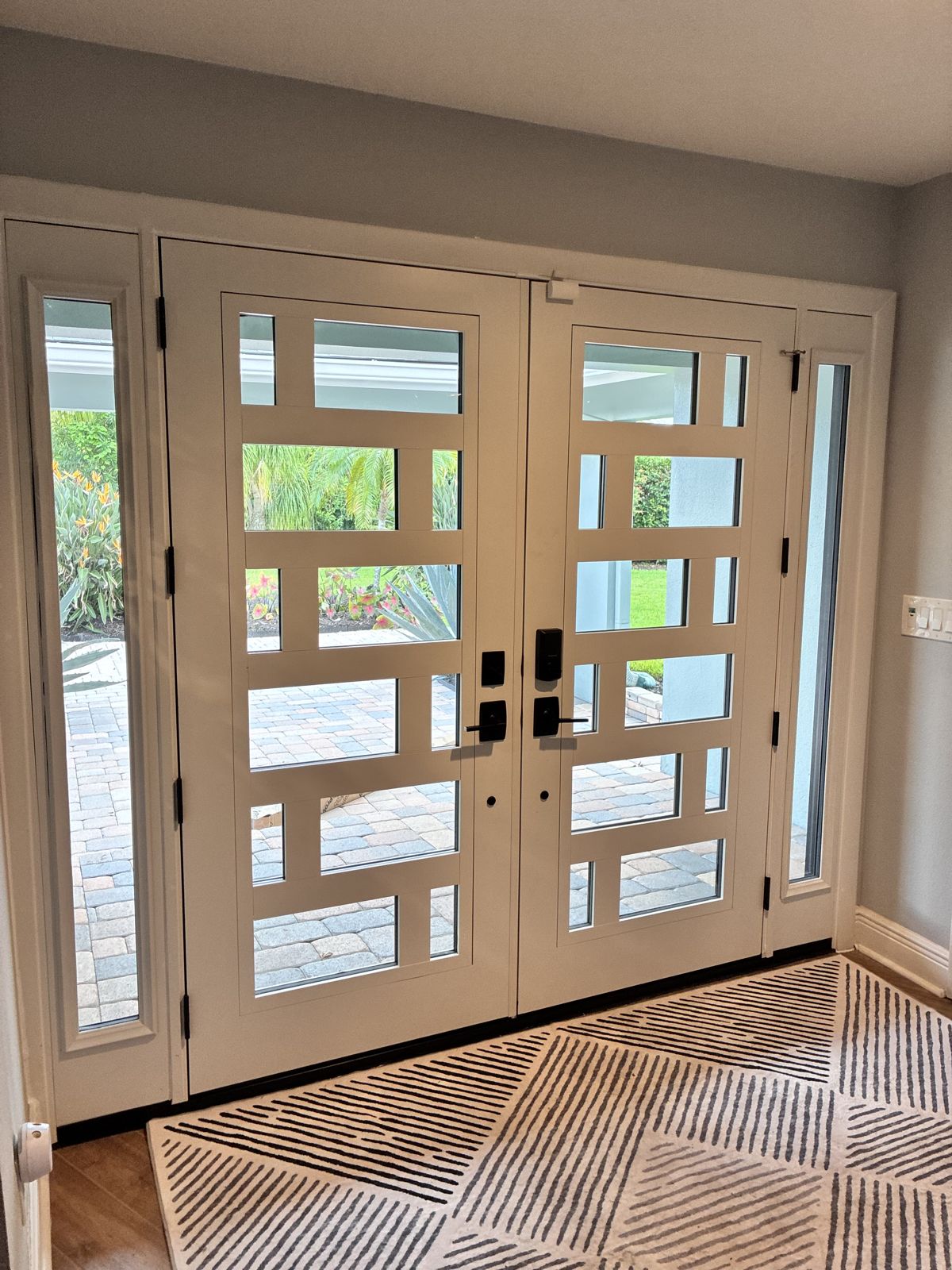
A door has to do more than a window. It has to stand up to a hurricane, keep the rain out, lock tight, and still open smoothly every day. Here's how to pick the right one.
Start with the opening
- Entry doors: your front door sets the look of the house. Impact entry doors come in fiberglass, steel, and aluminum and glass, with sidelites and transoms.
- French doors: a classic choice for patios and lanais, with two swinging panels and full glass.
- Sliding glass doors: the most common door on Florida lanais and pool decks. Bigger panels mean bigger views, and more wind load to handle.
- Multi-slide and folding doors: walls of glass that open up a room to the outdoors. These take careful engineering and installation.
- Garage doors: often the largest opening on the house. Large garage doors can fail under wind pressure (FEMA), so it's worth checking yours is wind-rated or impact-resistant (FLASH).
Outswing or inswing?
For storm resistance, outswing usually wins. When wind pushes on an outswing door, the door presses into the stops on three sides of the frame. An inswing door is held back only by its hinges and latches, so wind-driven rain tends to push it away from the stops (Florida Division of Emergency Management).
Inswing doors can still be the right fit for some openings, like where an outswing door would hit a step or a walkway. We'll walk you through the tradeoff for each door.
The ratings that matter
- Impact rating: look for large missile impact testing. The door is hit with a heavy wood missile, then put through thousands of pressure cycles that mimic hurricane wind.
- Design pressure: how much wind load the door can handle, in pounds per square foot. The right number depends on your home's location, height, and exposure.
- Product approval: every door should carry a Florida Product Approval or a Miami-Dade NOA number. Here's what that means.
- Water resistance: a door can survive the wind and still leak. Ask how it's rated for water, especially on exposed walls.
The details you'll live with
- Glass: tint, Low-E coatings for heat, and privacy glass for front doors and bathrooms.
- Hardware: multi-point locks that latch at the top, middle, and bottom are stronger and seal better.
- Frame color and finish: white, bronze, black, or wood-look, to match your windows and your house.
- Sill height: on a lanai or pool deck, ask about low or flush sills so the door is easy to walk through.
Installation is half the door
An impact door is only as strong as how it's attached to your house. The anchors, the shims, and the waterproofing around the frame all have to match the product approval. Our doors are installed by in-house master carpenters, not subs found for the week.
Questions to ask any door company
- What's the product approval number, and what design pressure is it rated for?
- Is it outswing or inswing, and why is that the right call for this opening?
- What kind of lock does it have?
- Who's doing the install, and how is the frame sealed?
- What's the lead time? Ours usually run 6 to 12 weeks, depending on the manufacturer.
Ready to look at doors?
We'll measure every opening and walk you through options from PGT, ES Windows, WinDoor, ProVia, and more.
Get My Free EstimateMore from the blog
Your hurricane season home checklist →What a wind mitigation inspection can save you →Why roof quotes in Tampa can vary by thousands →See all articles →This article is general information, not engineering advice. Code requirements can vary by jurisdiction.